

How Vibe Coding Apps Transform Enterprise Software Development
Vibe coding apps are reshaping how enterprise teams accelerate software development cycles and break through critical bottlenecks. When ambitious digital transformation roadmaps collide with finite engineering capacity, legacy codebases, tight deadlines, and persistent talent shortages, gridlock sets in fast. AI-assisted coding changes that equation entirely. It lets developers ship faster, smarter code without sacrificing quality or security.
Key Takeaway
AI-assisted coding tools can unlock 20-30% productivity gains for enterprise teams when implemented strategically alongside robust governance frameworks and cultural buy-in.
In This Article
- Why Enterprise Development Speed Matters Now
- Core Challenges Enterprise Teams Face
- The Solution: Vibe Coding Apps and AI-Assisted Coding
- Why Leading Enterprise Teams Choose Vibe Coding Apps
- Real-World Applications Across Enterprise Sectors
- How to Get Started With Vibe Coding Apps
- Frequently Asked Questions

Why Enterprise Development Speed Matters Now
Enterprise software teams are under unprecedented pressure. According to Gartner research on digital transformation acceleration, organizations that deploy features faster gain measurable competitive advantage in market responsiveness and customer retention. The post-pandemic shift toward continuous delivery and agile practices has made time-to-market a non-negotiable competitive differentiator.
Here’s what’s changed. Cloud-native architectures, microservices, and DevOps maturity have compressed deployment cycles from quarters to weeks. But here’s the tension: many enterprise teams struggle to keep pace. They’re caught between modernizing legacy systems and meeting aggressive feature roadmaps, all while managing technical debt and talent shortages.
“54% of enterprise IT leaders cite developer productivity and time-to-market as top priorities for digital transformation investments over the next two years.”
Forrester Wave: Enterprise Developer Productivity Tools, 2024
The consequence? Real and painful. When teams can’t ship fast enough, feature backlogs grow. Technical debt accumulates. Innovation stalls. Worse, senior engineers burn out managing maintenance work instead of architecting next-generation capabilities. Sound familiar?
Core Challenges Enterprise Teams Face
Enterprise development teams encounter specific, compounding obstacles that slow delivery and frustrate talented engineers:
- Developer context-switching and cognitive load: Engineers working in complex, context-heavy codebases spend significant time context-switching between systems, domains, and legacy patterns. This mental overhead reduces time spent on strategic problem-solving.
- Routine coding consuming sprint capacity: Between 30-40% of sprint effort goes to routine tasks: boilerplate code, test scaffolding, configuration management, and documentation updates. It’s necessary work, but it steals cycles from innovation.
- Code quality inconsistencies across distributed teams: When teams are geographically distributed or large, maintaining consistent coding standards and best practices becomes organizationally difficult. This leads to longer code review cycles and more rework.
- Limited capacity for architectural evolution: When maintenance and routine delivery dominate the sprint, there’s little room for technical exploration, architectural improvements, or modernization initiatives.
- Talent gaps in specialized domains: Cloud-native development, microservices architecture, security hardening, and other specialized skills are scarce. Junior developers take longer to become productive in these domains.
- Prolonged code review and deployment cycles: Higher-quality code suggestions from intelligent tools reduce review iterations and accelerate deployment frequency.
The cumulative effect: delayed feature releases, mounting technical debt, reduced innovation velocity, and elevated burnout among senior engineers who spend more time mentoring and reviewing than building.
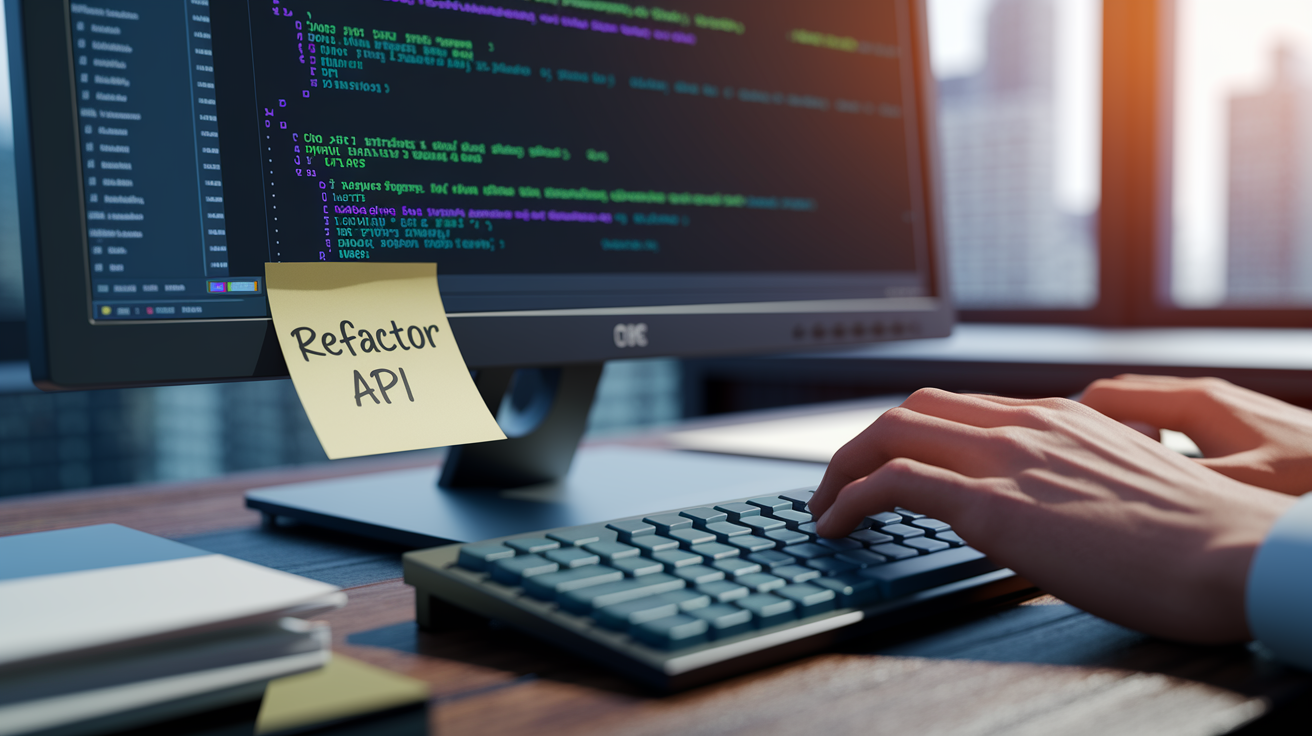
The Solution: Vibe Coding Apps and AI-Assisted Coding
Vibe coding apps powered by advanced AI models address each of these challenges directly. These tools use semantic understanding and contextual awareness to augment developer work, not replace it. When implemented thoughtfully alongside enterprise governance, they become strategic multipliers for team velocity and code quality.
Here’s how they work in practice. First, they reduce cognitive load by maintaining deep understanding of your codebase’s architecture and patterns. Developers can offload context-switching to the tool, freeing mental energy for complex decisions. Second, intelligent code suggestion eliminates routine boilerplate work. The tool generates well-tested, style-compliant scaffolding for common patterns, freeing developers to focus on unique business logic. Third, vibe coding apps enforce consistent best practices across distributed teams. Every suggestion reflects your organization’s coding standards, security policies, and architectural guidelines.
On top of that, by accelerating routine tasks, teams unlock capacity for innovation and technical modernization. Junior developers level up faster when AI guidance points them toward best practices. And code quality improves, reducing review iterations and speeding deployment cycles.
Expert Perspective
In our work with enterprise teams, successful AI-assisted coding implementations treat the tool as a collaborative coding partner, not a code-completion magic wand. Governance, security vetting, and developer buy-in matter as much as the underlying technology. Organizations that invest in change management and establish clear policies see adoption rates 3x higher than those that simply roll out the tool.
When evaluating vibe coding apps for enterprise use, prioritize these factors: enterprise-grade security (end-to-end encryption, SOC2 compliance, GDPR-ready), fine-tuning on your proprietary codebase without exposing code to public models, transparent IP policies that protect your intellectual property, and seamless integration with your existing CI/CD pipelines and code review workflows.

Why Leading Enterprise Teams Choose Vibe Coding Apps
Vibe coding apps are purpose-built for enterprise challenges in ways generic AI tools and traditional IDEs aren’t. Consider how they differentiate:
| Factor | Vibe Coding Apps | Generic AI Tools | Traditional IDEs |
|---|---|---|---|
| Codebase Context Awareness | Deep semantic understanding of enterprise architecture and proprietary patterns | Limited to public training data; struggles with proprietary code and legacy systems | No AI assistance; manual completions only |
| Security and Compliance | Built for GDPR, SOC2, HIPAA; encrypted processing; no code exposure to public models | Generic model; significant IP and privacy concerns in regulated industries | N/A; no external processing |
| Integration with DevOps Workflows | Native hooks into CI/CD, Git, code review platforms, and compliance gates | Manual integration required; limited automation | Limited automation; manual code review processes |
| Fine-Tuning on Your Codebase | Models trained on your code patterns in isolated, secure environments | One-size-fits-all; no organizational customization | N/A |
The differentiating factors run deeper. Enterprise vibe coding apps are designed from the ground up to handle organizational constraints: compliance requirements, security audits, architectural standards, and governance policies. This reduces implementation friction and risk for large organizations managing sensitive systems.
Worth noting: vibe coding apps provide measurable, contextual ROI. Rather than abstract productivity claims, you see concrete metrics: code review cycle time reduction, deployment frequency increase, escape rate decrease, and sprint velocity improvement. These are comparable across teams and easy to defend to finance and executive stakeholders.
Real-World Applications Across Enterprise Sectors
Vibe coding apps deliver distinct value across industries, each with unique regulatory and operational constraints:
Financial Services and Banking
Financial institutions accelerate API development and backend service generation while maintaining strict security and compliance postures. Vibe coding apps help teams generate regulatory documentation, enforce PCI-DSS coding standards, and rapidly prototype microservices for real-time transaction processing and risk analytics systems.
Healthcare and Life Sciences
Healthcare organizations speed up HIPAA-compliant systems development, clinical data pipeline engineering, and research software without compromising privacy frameworks. Vibe coding apps ensure all generated code meets privacy-by-design principles and audit trail requirements inherent in healthcare software.
Retail and Ecommerce
Retail enterprises deploy features faster for seasonal campaigns, omnichannel platform scaling, and backend microservices that handle peak traffic. Vibe coding apps reduce time-to-deploy for promotions and inventory management features while maintaining code quality across rapid scaling efforts.
Manufacturing and Logistics
Manufacturing and supply chain organizations build IoT backend services, real-time data pipelines, and supply chain optimization software faster. Vibe coding apps accelerate the development of edge computing code and data ingestion systems that demand both reliability and rapid iteration.
How to Get Started With Vibe Coding Apps
Implementing vibe coding apps in enterprise environments follows a structured, low-risk approach. Here’s what we’ve found works:
- Assessment: Audit your current development workflows and identify high-friction areas like extended code review times, long onboarding cycles, or routine task allocation. Align stakeholders across engineering, architecture, compliance, and security on adoption goals before selecting a tool.
- Pilot Program: Run a focused proof-of-concept with a single team or project on a non-critical system. Measure baseline metrics (code review cycle time, deployment frequency, code quality metrics) before and during the pilot to establish clear before-and-after comparisons.
- Integration: Connect vibe coding apps to your existing IDE, Git repositories, CI/CD pipelines, and code review platforms. This integration step determines ease-of-adoption and day-to-day developer experience.
- Governance Setup: Establish code quality gates, IP and security policies, audit logging, and escalation procedures. This step is critical for enterprise trust and regulatory compliance. Document your policies clearly so developers understand what the tool can and can’t do.
- Scale and Iterate: Roll out across teams based on pilot learnings. Gather continuous feedback, refine prompt engineering and governance policies, and measure cumulative impact on velocity and quality metrics across the organization.
Frequently Asked Questions
How does vibe coding handle proprietary code and IP concerns?
Enterprise vibe coding apps isolate your codebase within secure, encrypted environments. Models can be fine-tuned on your code without exposing it to external systems or public training datasets. Verify your vendor’s IP policy and security certifications (SOC2, GDPR, HIPAA) upfront. Request a data processing agreement and review their audit logs to confirm compliance.
Will AI-assisted coding replace my engineering team?
No. These tools augment developer expertise, handling routine and well-understood coding patterns. Strategic architecture, design decisions, complex problem-solving, and business logic remain human responsibilities. The honest answer is, the ROI comes from freeing your best talent to focus on higher-value work rather than repetitive tasks.
How does vibe coding integrate with our existing CI/CD and code review processes?
Modern vibe coding apps integrate via IDE plugins, Git hooks, and API integrations with popular CI/CD platforms (Jenkins, GitLab CI, GitHub Actions, Azure DevOps). Quality gates and compliance checks remain under your control. The tool suggests code, but your team’s existing review and approval processes stay unchanged.
What’s the learning curve for developers new to AI-assisted coding?
Most developers become productive within days of first use. The key is treating vibe coding as a collaborative tool, not a replacement. Organizations that provide structured training, establish best-practice guides, and celebrate early wins see significantly higher adoption rates and stronger outcomes.
How do we measure ROI from vibe coding apps?
Track metrics like code review cycle time, deployment frequency, bug escape rate (defects found in production vs. development), and sprint velocity. Compare pre- and post-implementation baselines. Also measure qualitative outcomes: developer satisfaction, time-to-productivity for new hires, and team morale. Most organizations see measurable improvements within the first month of consistent use.
Transform Your Engineering Velocity With Vibe Coding
Enterprise teams are already using AI-assisted coding to accelerate development, reduce technical debt, and free engineers for strategic work. Learn how ViZRR helps you implement vibe coding apps with enterprise-grade governance and measurable ROI. Our specialists will assess your workflows and priorities in a focused conversation.