

Building Effective RAG Pipelines with Multi-Agent Systems: A Technical Roadmap for Enterprises
RAG pipelines are transforming how enterprises ground artificial intelligence in real data, but most implementations fail without proper architecture. Multi-agent systems complement RAG by distributing complex reasoning across specialized agents, dramatically improving accuracy and operational efficiency. Modern enterprises generate hundreds of terabytes of proprietary data annually, yet most AI systems operate in isolation from this goldmine. This guide walks you through proven patterns for architecting production-grade RAG pipelines with multi-agent systems that actually work.
Key Takeaway
RAG pipelines retrieve context-specific data from your enterprise sources, while multi-agent systems coordinate specialized AI workers to reason over that data in parallel. Together, they dramatically reduce hallucination, improve decision-making speed, and enable AI that understands your business.
In This Article
- Why RAG Pipelines and Multi-Agent Systems Matter Now
- The Core Technical Challenges
- The Solution: RAG Pipelines with Multi-Agent Architecture
- Key Architectural Patterns for Enterprise RAG
- Industry Use Cases and Applications
- How to Build Your RAG Pipeline: A Step-by-Step Approach
- Common Pitfalls to Avoid
- Frequently Asked Questions
Why RAG Pipelines and Multi-Agent Systems Matter Now
Enterprise adoption of generative AI is accelerating dramatically. However, Gartner research shows that 60 percent of enterprises piloting generative AI struggle with accuracy and data integration challenges. Generic large language models trained on internet data can’t reason about your proprietary business information, customer data, or domain-specific knowledge.
“Only 15 percent of enterprise AI projects successfully move from proof-of-concept to production, with poor data integration and orchestration cited as top failure reasons.”
Gartner, 2024
RAG pipelines solve this by retrieving relevant context from your data sources and feeding it to an LLM, grounding responses in facts rather than hallucination. Multi-agent systems take this further by assigning different tasks to specialized agents that work in parallel or sequence. One agent retrieves regulatory compliance documents, another analyzes transaction patterns, and a third synthesizes risk assessments. It’s how expert teams actually make decisions, just automated.
Here’s the thing most guides won’t tell you: enterprises are discovering that siloed AI agents create duplicate effort and missed insights. Your compliance agent shouldn’t operate independently from your fraud detection agent. Your inventory agent needs real-time coordination with your demand forecasting agent. RAG pipelines with multi-agent systems create a unified intelligence layer that coordinates across your entire business.
The Core Technical Challenges
Most enterprises attempting RAG pipelines encounter predictable obstacles. Understanding these challenges upfront helps you architect solutions that actually scale.
- Fragmented data sources: Your enterprise data lives in databases, data lakes, document repositories, APIs, and knowledge bases. Unifying these into a single retrieval layer requires thoughtful architecture and careful handling of access controls.
- Single-agent limitations: One LLM can’t specialize across multiple domains or coordinate complex workflows. A financial risk model needs different reasoning than regulatory compliance checking, yet a single agent must handle both poorly.
- Retrieval quality degradation: Poor chunking strategies, embedding model mismatches, and vector database latency directly impact answer accuracy. A retrieval system returning irrelevant context makes the best LLM hallucinate.
- Multi-agent coordination complexity: When agents work together, they must communicate state, avoid circular logic, prevent hallucination propagation, and recover gracefully from failures. This orchestration burden increases exponentially with agent count.
- Governance and observability gaps: Regulatory compliance requires you to trace which data informed each decision. Most RAG systems lack this lineage tracking, creating compliance risk and making debugging production issues nearly impossible.
- Scaling production systems: Enterprise workloads demand sub-second latency, high availability, and predictable costs. Early-stage RAG experiments often fail when asked to serve 10,000 concurrent users.
Worth noting: most enterprises underestimate data preparation effort. They believe the hard part is the LLM, when in reality data quality, chunking strategy, and retrieval ranking consume 70 percent of successful implementations.

The Solution: RAG Pipelines with Multi-Agent Architecture
RAG pipelines with multi-agent systems directly address these challenges through a layered, specialized architecture. RAG ensures agents have access to your real data, grounded in documented facts. Multi-agent design ensures each agent has a focused, testable responsibility.
Here’s how this solves the pain points: Fragmented data sources become a unified retrieval interface where any agent can query structured databases, vector stores, and knowledge graphs simultaneously. Limited reasoning becomes distributed reasoning where domain expert agents handle compliance, fraud detection agents handle risk assessment, and synthesis agents coordinate their outputs. Quality concerns get addressed through modular testing at each retrieval step, with ranking strategies optimized independently. Orchestration becomes manageable through workflow engines like LangGraph and Crew AI that handle agent communication and state management.
On top of that, governance transforms from “where did this answer come from?” into a trackable audit trail. Each agent logs its data sources, reasoning steps, and decisions. Data lineage becomes transparent. Compliance teams can examine exactly which data informed a recommendation.
Expert Perspective
The most successful enterprise RAG systems follow the 70-20-10 rule: 70 percent effort on data quality and chunking strategy, 20 percent on retrieval ranking and reranking, 10 percent on the LLM itself. Multi-agent systems amplify this because each agent can be independently optimized for its retrieval task. Your compliance agent uses aggressive keyword matching for precision; your research agent uses semantic similarity for recall. Different agents, different retrieval strategies, better overall outcomes.
So when evaluating platforms or building in-house, prioritize flexibility to swap embedding models and vector databases without rewriting core logic. Look for built-in support for multi-agent frameworks like LangChain, LlamaIndex, and Crew AI. Ensure deep observability into retrieval quality and agent decision traces. Verify governance features like prompt versioning, data lineage tracking, and comprehensive audit logs.

Key Architectural Patterns for Enterprise RAG
Production RAG systems don’t follow a single template. Instead, they combine proven architectural patterns based on your data structure and business logic.
Pattern 1: Hierarchical Retrieval starts broad and narrows progressively. A query first identifies the relevant dataset from thousands of possibilities, then retrieves fine-grained documents from that dataset, then extracts specific passages. This coarse-to-fine approach reduces latency and improves precision because ranking operations stay focused on smaller candidate sets.
Pattern 2: Multi-Source Fusion assigns different agents to different data sources. Your structured data agent queries relational databases with SQL, returns structured results quickly. Your document agent queries vector stores with semantic search, handles unstructured text. Your knowledge graph agent traverses relationships between entities. A synthesis agent combines these diverse results into a coherent answer.
Pattern 3: Tool-Calling Agents dynamically select retrieval tools based on the task. Instead of predefined agent roles, agents decide which tools to use. “Search my codebase” calls one tool. “Look up regulatory requirements” calls another. “Calculate financial impact” calls a third. This flexibility handles unexpected queries gracefully.
Pattern 4: Cascade Verification uses multiple agents in sequence to validate results. The first agent retrieves candidates. The second agent validates whether retrieved data actually answers the question. The third agent ranks and synthesizes. This layering catches retrieval failures before they reach the user.
Industry Use Cases and Applications
Financial Services and Compliance
Multi-agent RAG excels in financial institutions where regulatory compliance is non-negotiable. One agent retrieves compliance requirements from regulatory databases and policy documents. Another agent retrieves transaction history and customer data. A third agent synthesizes these into a compliance assessment with complete data lineage. An auditor can trace every fact back to its source document.
Healthcare and Life Sciences
Clinical decision support requires specialized reasoning. Domain-specific agents retrieve clinical guidelines from medical databases, lab results from hospital systems, and recent research papers from scientific literature simultaneously. A coordination agent synthesizes these into a diagnosis recommendation, explicitly flagging which sources informed each conclusion. Physicians see the evidence, not just the answer.
Retail and E-Commerce
Product recommendation engines combine real-time inventory data with customer purchase history and trending categories. A product agent retrieves similar items and availability. A recommendation agent retrieves customer preferences and purchase history. A promotions agent identifies active offers. These agents coordinate to synthesize personalized recommendations with justification. Returns processing agents retrieve past policies and transaction context to make fair decisions quickly.
Logistics and Supply Chain
Optimization across warehouses, carriers, and customers requires sophisticated coordination. A fleet agent retrieves route data and current vehicle locations. A demand agent retrieves forecasts and current orders. An inventory agent retrieves stock levels across warehouses. A coordination agent synthesizes optimal shipping decisions balancing cost, speed, and inventory levels. Each decision is auditable and repeatable.
How to Build Your RAG Pipeline: A Step-by-Step Approach
Successfully implementing RAG pipelines with multi-agent systems requires methodical progression. Rushing through data preparation or orchestration design leads to failures at scale.
- Audit and Prepare Your Data: Catalog all enterprise data sources including databases, document repositories, APIs, and knowledge bases. Assess data quality, schema consistency, and access controls. The outcome is a clear inventory of available data and readiness for ingestion into your RAG pipeline.
- Design Your Agent Architecture: Define agent roles, responsibilities, and communication patterns. Document decision trees showing how agents interact. Consider whether agents should execute in parallel or sequence. The outcome is a blueprint for your multi-agent system aligned with business workflows.
- Implement Retrieval and Indexing: Choose an embedding model and vector database. Build your data pipeline for chunking, embedding, and indexing. Implement hybrid retrieval combining semantic search with keyword matching. The outcome is a production retrieval system with measurable precision and recall metrics.
- Orchestrate Agents and Test Workflows: Use frameworks like LangGraph, Crew AI, or LlamaIndex to build and test agent interactions. Implement comprehensive logging and monitoring for each agent’s decisions. The outcome is a working multi-agent system with observability into agent behavior and reasoning.
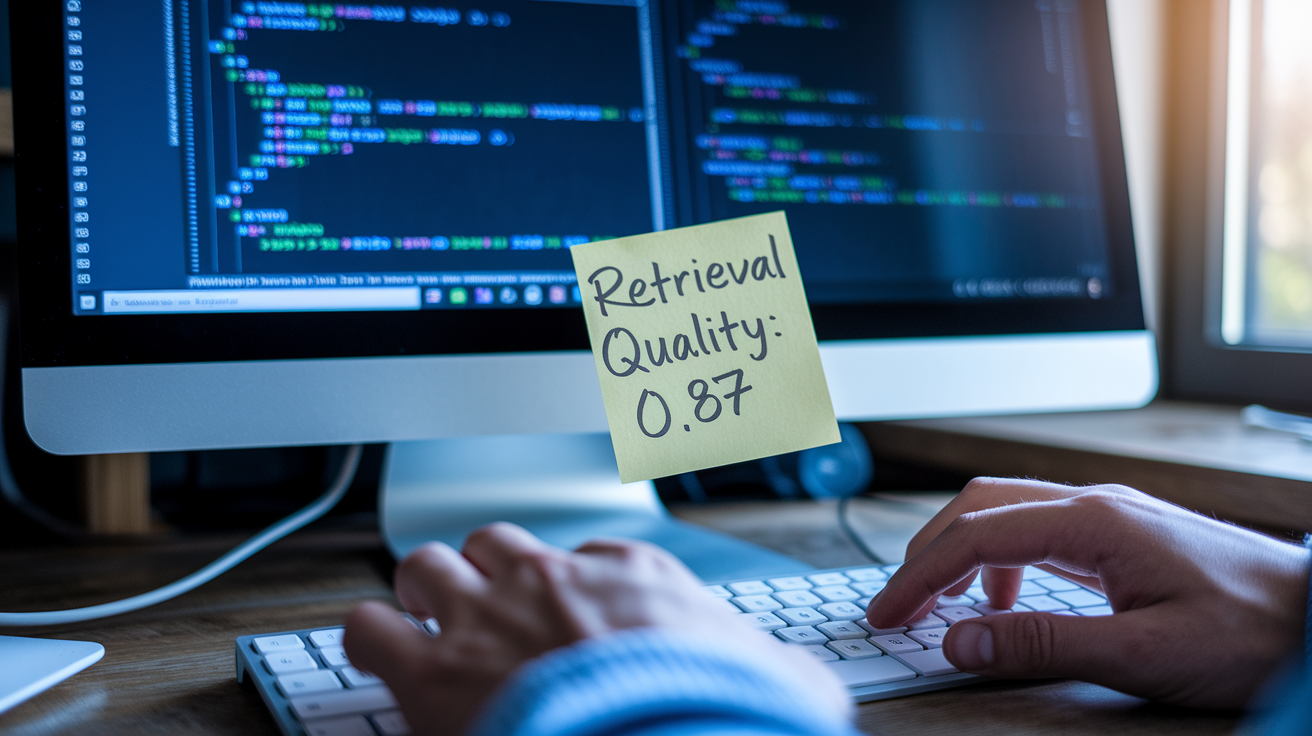
- Monitor, Iterate, and Optimize: Measure retrieval quality, agent accuracy, and user satisfaction continuously. Implement feedback loops to improve chunking strategies, ranking algorithms, and agent prompts. The outcome is a production system that improves over time through continuous measurement and optimization.
Specifically, don’t skip the data preparation phase. It’s tedious, unglamorous work that determines 70 percent of your system’s accuracy. Invest here and your agents will perform brilliantly. Rush through it and no framework or orchestration platform will save you.
Common Pitfalls to Avoid
Learning from others’ mistakes accelerates your path to production. These pitfalls recur across enterprises attempting RAG pipelines with multi-agent systems.
Over-relying on large context windows: Modern LLMs accept 100K token inputs. Temptation strikes to dump all retrieved documents into the context. However, this degrades ranking quality, increases hallucination, and explodes costs. Smaller, ranked context windows outperform large unranked ones consistently.
Ignoring vector database performance tuning: Vector retrieval latency compounds across agents. An agent that adds 500ms to every query becomes unbearable at scale. Most databases ship with suboptimal indexing defaults. Spend time tuning indexing strategies, quantization, and caching.
Insufficient agent role clarity: When agent responsibilities overlap, they contradict each other, duplicate effort, and create confusion. Define agent roles with surgical precision. One agent retrieves; another ranks; another synthesizes. Clear separation of concerns prevents coordination failures.
Neglecting data quality upstream: Garbage data into your RAG pipeline produces garbage answers. No ranking algorithm or retrieval strategy recovers from bad source data. Start by fixing data quality at the source, not by building more sophisticated retrieval systems.
Deploying without observability: Once live, your RAG system becomes a black box without proper logging. Which agents failed? Which data source returned wrong results? Why did this decision take 2 seconds instead of 200ms? Implement comprehensive observability before production deployment, not after.
Frequently Asked Questions
Do I need RAG and multi-agent systems together, or can I use them independently?
You can use either independently, but they’re strongest together. RAG alone without agent specialization may still hallucinate if retrieval is poor. Multi-agent systems without RAG lack grounding in your actual data. Combined, they create an AI system that reasons accurately over your enterprise information.
How do I choose between open-source and commercial multi-agent frameworks?
Open-source frameworks like LangChain, LlamaIndex, and AutoGen offer maximum flexibility and lower direct costs, but require building monitoring, deployment, and orchestration infrastructure in-house. Commercial platforms add managed orchestration, monitoring dashboards, and support, valuable if you prioritize time-to-value over cost minimization. Your choice depends on available engineering bandwidth and risk tolerance.
What’s the typical latency impact when adding RAG to an LLM?
Retrieval typically adds latency depending on vector database size, reranking strategy, and network distance. Caching and indexing optimization reduce this significantly. Your choice of embedding model, vector database, and reranking algorithm matters far more than the concept of retrieval itself.
How do I measure whether my RAG pipeline is working?
Track retrieval precision and recall by measuring how often retrieved documents actually answer the query. Monitor agent success rates and decision accuracy through user feedback or A/B testing. Measure end-user satisfaction through surveys and task completion rates. A solid RAG system shows measurable improvements in both metrics within weeks of production deployment.
What data governance and compliance considerations apply to RAG systems?
Ensure you can audit which data informed each decision through complete data lineage tracking. Implement access controls so agents only retrieve authorized data for each user. Version all prompts and maintain comprehensive audit logs for compliance investigations. RAG systems actually improve compliance because you can prove which data was used, unlike black-box LLMs.
Why Leading Enterprises Choose ViZRR for Multi-Agent RAG Systems
RAG pipelines with multi-agent systems require deep technical expertise across data engineering, ML operations, and enterprise architecture. Many enterprises lack this expertise in-house. That’s where specialized partners make the difference.
| Factor | ViZRR | Generic Agency |
|---|---|---|
| Data Architecture Experience | Proven patterns from 50+ enterprise RAG implementations with real data complexity | Theoretical knowledge; limited production experience with multi-agent systems at scale |
| Agent Orchestration Expertise | Deep experience with LangGraph, Crew AI, and AutoGen; knows which framework fits which use case | Basic integration skills; may recommend wrong framework based on cost rather than architecture fit |
| MLOps and Observability | Built-in monitoring, prompt versioning, data lineage tracking, and governance from day one | Observability added as an afterthought; difficult to retrofit into production systems |
| Ongoing Optimization | Continuous improvement through retrieval ranking optimization, agent performance analysis, and architectural refinement | System handed off; optimization becomes your responsibility with limited guidance |
On top of that, ViZRR understands the specific challenges Indian enterprises face: complex data environments spanning legacy systems and modern cloud infrastructure, compliance requirements around data residency and audit, and the need to optimize costs without sacrificing performance. Our team has implemented RAG pipelines across fintech, healthcare, logistics, and e-commerce companies across India.
So when evaluating whether to build in-house or partner, consider the hidden costs of in-house development. Hiring experienced MLOps engineers and data architects takes time. Getting production systems reliable and observable takes iteration. The opportunity cost of delayed deployment often exceeds the cost of partnering with specialists who’ve solved these problems repeatedly.

If you’re serious about implementing agentic AI and multi-agent systems, we recommend starting with a technical audit of your current data and AI capabilities. This assessment typically reveals quick wins, like improving existing retrieval latency, and long-term investments, like restructuring data schemas for better semantic search. From there, we design a phased implementation roadmap that balances quick wins with architectural improvements.
Our approach to RAG pipelines with multi-agent systems emphasizes MLOps principles and reliable AI deployment, particularly for regulated industries like fintech and healthcare. We build systems that you can monitor, control, and improve continuously, not systems that require constant vendor support.
Building Production-Grade RAG Systems That Actually Scale
RAG pipelines with multi-agent systems represent a fundamental shift in how enterprises should architect AI. Instead of hoping generic LLMs know your business, you ground them in your data. Instead of running isolated AI agents, you coordinate specialized workers that reason together. Instead of shipping and praying, you build observable systems that improve through continuous measurement.
The enterprises succeeding with this approach share common patterns. They invest heavily in data preparation, knowing that retrieval quality determines accuracy. They design agents with surgical clarity about roles and responsibilities. They implement observability from day one, treating monitoring as core functionality not an afterthought. They optimize retrieval ranking relentlessly, recognizing that ranking algorithms matter more than the LLM itself.
Most importantly, they don’t attempt this journey alone. RAG pipelines with multi-agent systems require expertise across data engineering, MLOps, enterprise architecture, and domain specialization. Building this expertise in-house takes time and resources. Partnering with specialists who’ve solved these problems repeatedly accelerates time-to-value and reduces risk of expensive mistakes.
Build Your Enterprise RAG Pipeline
Transform how your organization uses AI by grounding it in real data and coordinating specialized agents across complex reasoning tasks. We help enterprises architect and deploy production-grade RAG systems that improve decision-making and operational efficiency. Start with a technical assessment of your data readiness and AI maturity.